Why You Should Consider Medicare Approved Wheelchairs for Mobility Needs?
As mobility needs grow, many individuals turn to Medicare-approved wheelchairs for support. Dr. Sarah Thompson, an expert in rehabilitation technology, emphasizes, “Choosing the right mobility aid can enhance independence and improve quality of life.” This statement resonates deeply when considering the impact of mobility on daily activities.
Medicare-approved wheelchairs ensure that users receive devices that meet specific healthcare standards. This can be confusing for many. The approval process might seem complicated, but it guarantees quality and safety. A proper wheelchair can make a difference between staying at home and enjoying the community.
In a world bustling with options, it’s crucial to reflect on what truly meets one’s needs. Not every wheelchair is suitable for every person. Sometimes, individuals overlook the importance of professional advice. Embracing Medicare-approved wheelchairs might just be the first step toward reclaiming independence.

Understanding Medicare Approved Wheelchairs and Their Benefits
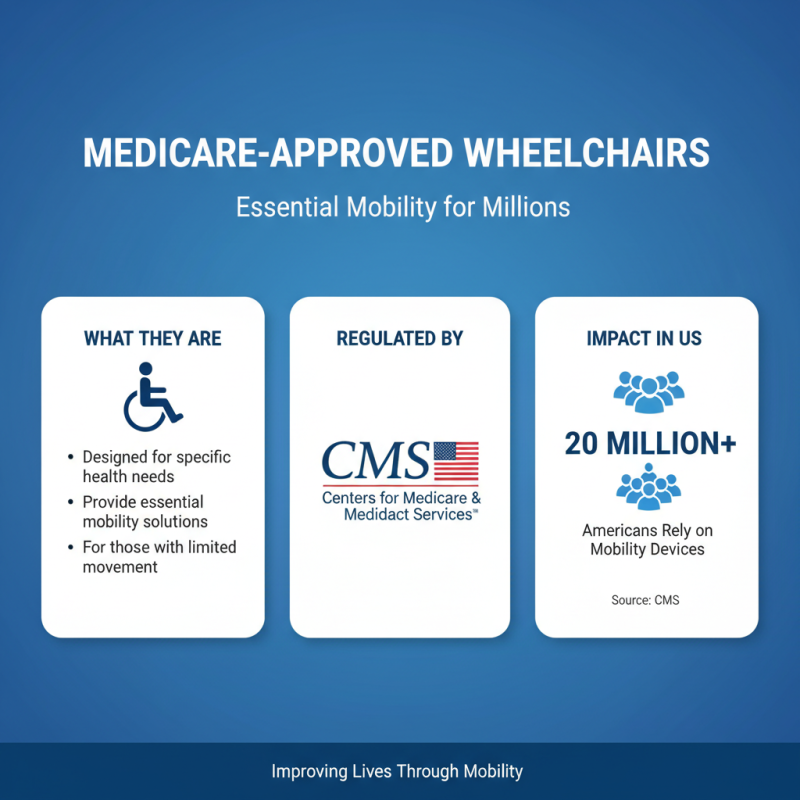
Medicare approved wheelchairs provide essential mobility solutions for those with limited movement. These wheelchairs are designed to meet specific health needs. According to the Centers for Medicare & Medicaid Services, about 20 million people in the U.S. rely on mobility devices. This highlights a significant dependency on such equipment.
Choosing a Medicare-approved wheelchair can ease financial burdens. Coverage may include standard wheelchairs or power scooters. Costs for these devices can range widely. A manual wheelchair might cost around $200 to $600, while a power scooter could exceed $2,000. Having Medicare approval can lower out-of-pocket expenses significantly.
**Tip:** Always get a prescription from a doctor. This is crucial for Medicare coverage. Ensure the wheelchair fits your health requirements.
Quality of life improves with the right mobility device. Using an approved wheelchair ensures safety and comfort. It can serve daily living needs effectively. However, some individuals may struggle to navigate the approval process. Understanding your eligibility is essential.
**Tip:** Keep records of medical documentation. This helps when filing claims. Review your choices carefully, and consider specialists for assessments. Making informed decisions can lead to better outcomes.
Eligibility Criteria for Medicare Coverage of Wheelchairs
Medicare coverage for wheelchairs is essential for many individuals with mobility challenges. Eligibility criteria can be complex. Generally, you must meet specific health requirements to qualify. According to the Centers for Medicare & Medicaid Services (CMS), individuals must have a medical necessity for a wheelchair. This is often determined through an assessment by a healthcare provider. Documented need is crucial; without it, approval may be denied.
Certain conditions may enhance eligibility, such as severe arthritis or neurological disorders. Statistics show that about 4 million Americans rely on mobility aids, including wheelchairs. Many of these individuals qualify for Medicare assistance. It's essential to keep in mind that Medicare generally covers only standard electric or manual wheelchairs. High-end models and add-ons may not be included. This limitation can lead to disappointment for those seeking advanced features.
Navigating Medicare applications can be daunting. Forms must be filled out carefully. Mistakes can result in significant delays or denials. Many eligible applicants may find the process overwhelming. According to recent studies, more than 30% of claims related to mobility aids face challenges during the approval process. Understanding the criteria and involved documentation can simplify obtaining much-needed mobility assistance.
Key Features of Medicare Approved Wheelchairs
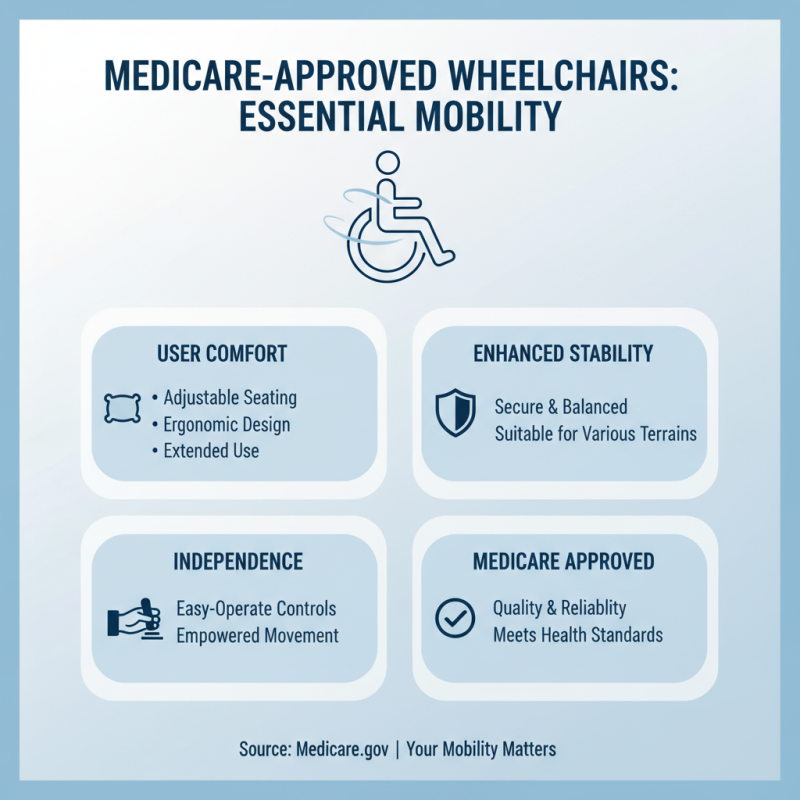
When considering mobility needs, Medicare approved wheelchairs offer essential features. These wheelchairs are designed with user comfort in mind. They often have adjustable seating and ergonomic designs that enhance stability. This makes them suitable for extended use. Many models feature easy-to-operate controls, empowering users to move independently.
Durability is another key attribute of these wheelchairs. They can withstand daily wear and tear. Some models include foldable frames, making transport more manageable. It’s worth noting, though, that not all models are created equal. Users may find certain designs limit mobility in tighter spaces. It is crucial to test different options before settling on one.
Safety is also vital. Many wheelchairs come with anti-tip wheels and secure braking systems. However, some may lack these features or may not perform as expected. Regular maintenance is necessary to ensure safety equipment operates effectively. Understanding these nuances can help users make informed choices. A wheelchair should enhance, not hinder, daily activities.
Comparing Costs: Medicare Approved vs. Non-Approved Wheelchairs
When considering wheelchairs for mobility, cost is often a major factor. Medicare approved wheelchairs generally have lower out-of-pocket expenses. Patients using Medicare can benefit from coverage that significantly reduces the overall price. This includes essential features that meet medical needs.
On the other hand, non-approved wheelchairs may offer more options but at a higher cost. They might lack necessary features covered by Medicare. Patients could end up paying more for less. Additionally, the absence of thorough medical oversight might mean reduced safety and reliability.
Figuring out the best choice is not always easy. While affordability is key, comparing functionality is crucial too. Approved options often have built-in features designed for specific mobility issues. Not all non-approved models provide this. Finding the right balance between cost and quality can be challenging. It requires a thoughtful approach to meet individual needs.
Comparison of Costs: Medicare Approved vs. Non-Approved Wheelchairs
Tips for Choosing the Right Wheelchair for Your Mobility Needs
Choosing the right wheelchair is vital for meeting your mobility needs. Start by assessing your specific requirements. Consider how often you’ll use it and the surfaces you’ll navigate. If you have limited indoor space, a compact model may work best. For outdoor activities, a sturdier chair may be necessary. Make a list of your longest routes. This helps identify the best choice for you.
Test the wheelchair before making a decision. Feeling comfortable is a must. Check the seat width and depth for a proper fit. An adjustment may be necessary if it feels too tight. Stability is essential too; ensure you can maneuver easily. Ask for assistance if you’re unsure about the features. Don’t hesitate to seek advice from healthcare professionals or others who've made similar choices.
Remember, a wheelchair should enhance your independence. Explore options that offer ease of movement. Think about portability if you travel often. Sometimes, compromises are needed. What might work for some may not suit you. Reflect on your daily life. Adaptability is key in making a decision that truly meets your mobility needs.