Choosing the right check valve in 2026 is a practical engineering decision, not a simple product comparison. Piping systems face changing pressures, fluid temperatures, flow rates, and installation limits. A valve that protects a clean-water line may fail in a slurry pipeline. Small details matter, including cracking pressure, reverse-flow speed, maintenance access, and body material.
Industry data shows why this market deserves careful attention. Grand View Research has reported continued growth in the global industrial valves market, supported by water treatment, energy, chemicals, and infrastructure investment. Mordor Intelligence also identifies rising demand for check valves across oil and gas, power generation, and industrial processing. These reports suggest strong market expansion, but forecasts are not selection rules. Actual performance still depends on system design and operating conditions.
No single valve wins everywhere. Swing check valves suit many horizontal pipelines and moderate flow conditions. Lift, piston, wafer, dual-plate, and spring-loaded designs offer different responses to space, pressure, and water-hammer risks. API 6D, ASME B16.34, and ISO 5208 provide useful benchmarks for design, pressure containment, and testing. However, compliance does not replace engineering judgment.
This guide compares the top check valve types expected to matter in 2026. It considers real installation concerns, including a cramped pump room, abrasive particles, and frequent cycling. Some recommendations may remain imperfect because field data is never identical. That uncertainty deserves attention. The best choice begins with verified operating data, supplier documentation, and an honest review of failure consequences.
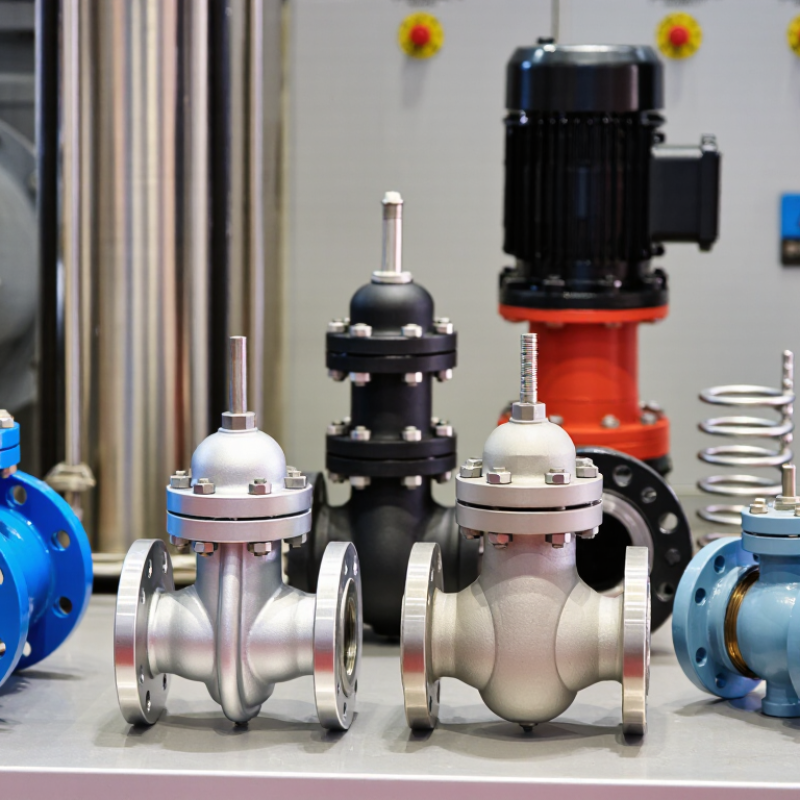
A check valve is an automatic flow-control device. It permits fluid to move in one direction and blocks reverse flow. Unlike an actuated valve, it needs no handle, motor, or operator. When upstream pressure exceeds downstream pressure, the closure element lifts from its seat. Reverse pressure pushes it closed. This simple response protects pumps, filters, and piping from backflow and pressure shocks.
In field inspections, I usually look for flow direction, mounting position, and signs of water hammer. A spring-loaded poppet closes quickly and suits compact lines with changing flow. A swing check uses a hinged disc and often creates lower pressure loss. However, it needs enough flow to open fully. Dual-plate wafer designs reduce weight and installation space. They can fit between flanges, but installation direction remains critical. Small details matter.
Choosing among top check valve types requires matching the valve to the fluid, temperature, pressure, and flow speed. Dirty water may restrict a narrow poppet or damage its seat. Pulsating pump discharge can cause repeated slamming and early wear. Engineers should verify cracking pressure, pressure rating, materials, and maintenance access. I have seen a correctly sized valve fail early because a pipe was misaligned. That mistake was easy to miss. Manufacturer data, applicable standards, and site testing should support the final decision. No selection is perfect.
A check valve permits flow in one direction and blocks reverse movement. Its disc, ball, or plate responds to pressure differences. Swing check valves use a hinged disc that opens with forward flow. They work well in horizontal pipelines with steady flow. Their slow closing action can reduce pressure surges. Yet, the disc may slam when flow suddenly stops. That detail matters.
Lift check valves raise a guided piston or disc from its seat. They provide reliable sealing in clean, high-pressure systems. Ball check valves use a floating ball, making them simple and compact. They often handle wastewater, slurry, and fluids containing small solids. Diaphragm check valves use a flexible membrane instead of a rigid disc. This design can limit contamination and reduce metal contact. However, diaphragm wear deserves regular inspection.
Choosing the correct type requires more than matching pipe size. Review pressure, temperature, fluid cleanliness, installation direction, and expected flow speed. Wafer or dual-plate valves can save space between flanges. Their lighter plates may close quickly, but unstable flow can increase wear. A practical engineer also checks maintenance access and replacement time. Oversized valves may fail to close fully at low flow. Undersized valves can create excessive pressure loss. No valve is perfect. The best selection balances operating principle, pipeline behavior, and realistic maintenance conditions.
2026 Top Check Valve Types: Which One Should You Choose?
Choosing a check valve starts with pressure, not appearance. Confirm the system’s normal pressure, surge pressure, and temperature range. A valve rated too closely to operating pressure may fail early. Leave a practical safety margin. Also check the pressure drop across the valve. A swing check valve often offers efficient flow, while a spring-loaded valve may respond faster. That difference matters in pumps, compressors, and vertical pipelines.
Flow direction and installation position must match the valve design. Swing valves usually need a horizontal line or a suitable vertical upward flow. Lift and spring-loaded valves can fit tighter spaces, but their internal parts may create greater resistance. Dual-plate designs save space and can reduce water hammer when correctly selected. Measure the pipe size carefully. A slightly mismatched connection can cause turbulence and leakage.
Field experience reveals a common mistake: people compare only pressure ratings. I have seen valves pass a basic inspection, then chatter during low-flow operation. The problem was not the body rating. It was an unsuitable cracking pressure and poor installation alignment. Review the flow rate, media cleanliness, maintenance access, and expected cycling frequency. For abrasive or dirty fluids, internal wear deserves special attention. Verify calculations against current technical standards and the manufacturer’s data. No single check valve suits every system.
| Valve Type | Typical Pressure Capability | Flow Capacity & Pressure Drop | Closing Speed & Water Hammer Risk | Preferred Installation | Best-Suited Applications | Main Advantages | Key Limitations |
|---|---|---|---|---|---|---|---|
| Swing Check Valve | Commonly available from low-pressure service up to approximately 16–40 bar, with higher-rated designs available. | High flow capacity and generally low pressure drop when fully open; requires sufficient forward flow to hold the disc open. | Moderate closing speed. Can contribute to water hammer if reverse flow develops before the disc closes. | Usually installed in horizontal pipelines with the hinge above the flow path. Some designs permit vertical upward flow. | Pipelines, water treatment, fire protection, pump discharge, and general liquid service. | Simple construction, large flow area, low maintenance, and good performance in clean liquids. | Poor choice for pulsating flow, low-velocity flow, frequent cycling, or applications requiring very fast shutoff. |
| Lift Check Valve | Often selected for medium- to high-pressure systems, commonly in pressure classes from approximately 150 to 600 and above. | Lower flow capacity and higher pressure drop than a swing valve because the disc moves through a restricted flow passage. | Good resistance to reverse flow, but closing can produce a noticeable pressure surge if the valve is oversized or flow is unstable. | Commonly installed horizontally; some piston designs are suitable for vertical upward flow. | Steam, gas, high-pressure liquid lines, boiler systems, and process piping. | Reliable sealing, suitable for higher pressures, and good resistance to reverse flow when correctly sized. | Higher pressure loss, orientation restrictions, and sensitivity to dirty or abrasive media. |
| Wafer Dual-Plate Check Valve | Commonly supplied for approximately 10–40 bar service, with higher-pressure versions available depending on design and materials. | Good flow capacity with a compact body; pressure drop is typically moderate and lower than many lift-style designs. | Fast spring-assisted closing generally reduces reverse flow and water hammer compared with a conventional swing design. | Installed between flanges. Orientation depends on the specific design; many models allow horizontal or vertical upward flow. | Large-diameter water lines, HVAC, cooling systems, pump discharge, and space-limited installations. | Short face-to-face length, light weight, quick response, and reduced installation space. | Spring and plate components can be sensitive to debris, and maintenance access may be limited between flanges. |
| Spring-Loaded Inline Check Valve | Commonly used from low pressure to approximately 40–100 bar, subject to body material, size, and spring selection. | Compact flow path with moderate pressure drop. Cracking pressure is commonly about 0.03–0.30 bar, but must be confirmed for the selected model. | Very fast closing and generally good control of reverse flow and water hammer. | Can often be installed in any orientation, provided the flow-direction arrow is followed and the spring is correctly selected. | Instrumentation, compressors, pumps, chemical systems, gas lines, and compact piping assemblies. | Compact size, flexible orientation, quick response, and reliable shutoff at low reverse-flow conditions. | Higher pressure drop than a full-port swing valve and possible sensitivity to fouling or spring fatigue. |
| Diaphragm Check Valve | Typically selected for low- to medium-pressure service, often below approximately 10–16 bar depending on the diaphragm and body material. | Moderate flow capacity with pressure drop affected by diaphragm flexibility and the available flow area. | Fast, quiet closure with good isolation from the surrounding mechanism. | Orientation varies by design; the manufacturer's installation position should be followed. | Sanitary, corrosive, contaminated, or slurry-related services where minimizing metal contact is important. | Few moving parts, good contamination resistance, and no exposed sliding metal seat in the flow path. | Diaphragm wear, limited temperature and pressure range, and possible permeability concerns with certain gases or chemicals. |
| Ball Check Valve | Commonly used in low- to medium-pressure systems, often up to approximately 16–40 bar depending on construction. | Moderate to high pressure drop in compact versions; full-port designs provide better flow performance. | Generally quiet and reliable at moderate flow rates; closure speed depends on ball mass, spring action, and flow direction. | Often suitable for horizontal and vertical upward-flow installation. Vertical downward flow is normally unsuitable. | Wastewater, sewage, slurry, dosing systems, pumps, and fluids containing suspended solids. | Handles dirty fluids well, has a simple mechanism, and can provide self-cleaning movement in some designs. | The ball and seat may wear with abrasive media; incorrect sizing can cause chatter and accelerated damage. |
| Foot Valve with Strainer | Usually applied to low- to medium-pressure suction service; pressure capability is limited by the body and strainer construction. | Adds suction-side pressure loss because of the valve and strainer; select a large enough size to protect pump NPSH margin. | Prevents the suction line from draining and helps maintain pump prime; water hammer is usually not the primary design concern. | Installed at the bottom of a suction pipe and submerged in the supply tank, well, or reservoir. | Pump suction lines, wells, irrigation, water transfer, and systems that must retain prime. | Combines backflow prevention with debris screening and reduces pump-start priming problems. | Strainer blockage can starve the pump; unsuitable for applications where additional suction resistance cannot be tolerated. |
2026 Top Check Valve Types: Which One Should You Choose?
Choosing the Right Check Valve for Different Applications
Selecting a check valve starts with the fluid, not the catalog picture. Water, steam, chemicals, and abrasive slurries behave differently inside a pipeline. A swing check valve suits clean water systems with steady flow and enough installation space. It may respond slowly when flow changes suddenly.
For compact piping, wafer and dual-plate check valves reduce weight and face-to-face length. Their spring-assisted plates close faster, helping control reverse flow and water hammer. However, fast closure can create pressure spikes in some systems. A lift check valve works well with high-pressure, clean fluids and vertical or horizontal piping. Always verify the permitted flow direction and mounting position.
For pumps, a spring-loaded check valve can protect against backflow during shutdown. A foot valve combines a check function with a suction strainer, making it useful for tanks and shallow wells. I have seen installations fail because engineers ignored debris, not because the valve type was wrong. Small particles can hold a seat open. That detail is easy to miss.
Review pressure, temperature, flow velocity, pipe size, leakage requirements, and maintenance access before ordering. Confirm materials against the process fluid and request tested performance data. Field experience matters, but assumptions can mislead. When flow is pulsating or solids are present, a basic selection table may not be enough. A qualified engineer should examine the complete piping system.
Compare the typical suitability of common check valve designs across major industrial applications. Scores range from 1 (limited suitability) to 5 (commonly suitable) and reflect general engineering characteristics rather than a specific pressure, flow, or manufacturer rating.
Selection guidance: Swing check valves are widely used in water and wastewater systems, while lift check valves are often preferred for higher-pressure or steam services. Wafer and dual-plate designs provide compact installation for pipelines, tilting-disc valves suit demanding flow systems, and diaphragm check valves are useful where chemical compatibility and contamination control are important.
2026 Top Check Valve Types: Which One Should You Choose?
Check valves protect pipelines from reverse flow, but they are not maintenance-free. Swing valves suit steady, low-velocity lines. Lift valves work well where pressure and alignment remain stable. Wafer designs save space, yet they can react badly to dirty fluid. Choose according to flow direction, pressure, temperature, pipe position, and fluid cleanliness. A valve that looks suitable on paper may fail during cycling.
Common problems include leakage, noisy closure, sticking discs, and water hammer. A rattling sound often signals unstable flow or an incorrectly sized valve. Inspect the hinge, spring, seat, and body during planned shutdowns. Look for scoring, corrosion, trapped debris, and uneven wear. Clean the sealing surfaces carefully. Do not force a stuck disc.
Small details matter.
During service, isolate and depressurize the line before opening the valve. Confirm that no stored pressure remains. Replace damaged seals with compatible materials, and tighten fasteners evenly. After reassembly, test for reverse leakage and unusual vibration. Record the date, operating conditions, and parts replaced. This history helps reveal repeated failures.
I have seen teams replace a valve when the real cause was excessive flow velocity. That mistake wastes time. However, inspection checklists are not perfect. Field conditions can expose problems that drawings never show. Recheck the installation after startup, especially near pumps and sharp pipe bends.
El Paso – Main Branch