Top Medical Equipment Lift Chairs for Global Buyers
Choosing the right medical equipment lift chairs requires more than comparing prices, colors, and motor counts. Global buyers must examine user safety, clinical suitability, construction quality, and after-sales support. A lift chair may look comfortable in a product photograph, yet its seat depth can leave a shorter user unsupported. The footrest may also stop too far from the floor. Small details matter.
Dr. Rory Cooper, a rehabilitation engineering pioneer, has said, “Technology should enhance a person’s independence, not define it.” This principle helps guide our review of leading medical equipment lift chairs. We consider transfer assistance, lifting angles, remote-control clarity, upholstery durability, battery backup, and ease of maintenance. We also examine whether suppliers provide understandable manuals, replacement parts, and responsive technical service across different markets. Reliable documentation matters. So does honest communication about weight limits and expected performance.
Our selection process reflects real purchasing concerns. Hospital buyers may prioritize frequent cleaning and dependable operation. Home-care distributors may need compact packaging and stable supply. Families often focus on quiet movement and simple controls. These priorities can conflict. A heavier frame may improve stability, but it can raise shipping costs. More functions may sound helpful, but they can confuse users with limited hand strength.
No ranking is perfect. Product availability, regional standards, and user needs change constantly. Therefore, this guide evaluates practical value rather than making absolute promises. It highlights medical equipment lift chairs that balance comfort, support, safety features, and long-term usability for buyers serving diverse populations.
What Medical Equipment Lift Chairs Are and How They Work
Medical equipment lift chairs are powered recliners designed to assist users from sitting to standing. A motor slowly raises the seat and tilts the backrest. Another motor may elevate the leg rest. This movement reduces the need for strong knee, hip, or arm effort. It does not replace professional rehabilitation.
The World Health Organization reports that falls cause about 684,000 fatal injuries worldwide each year. Its Global Report on Falls Prevention highlights older adults as a high-risk group. The U.S. Centers for Disease Control and Prevention also estimates that over three million older adults receive emergency treatment for fall injuries annually. These figures explain the chair’s practical value, but they do not prove that a lift chair prevents falls. Poor transfers, slippery flooring, or incorrect settings can still create danger. That detail is often overlooked.
Tips:
Check the user’s height, weight, hip width, and transfer ability before purchase. Confirm the lifting angle, seat depth, motor noise, and battery backup. Global buyers should verify voltage, plug type, warranty coverage, and local electrical compliance. Ask for test reports, user instructions, and service support in the destination language. A chair that feels supportive in a showroom may feel unstable at home. Careful fitting matters.
Main Lift Chair Types for Different Medical Needs
Top Medical Equipment Lift Chairs for Global Buyers
Main Lift Chair Types for Different Medical Needs
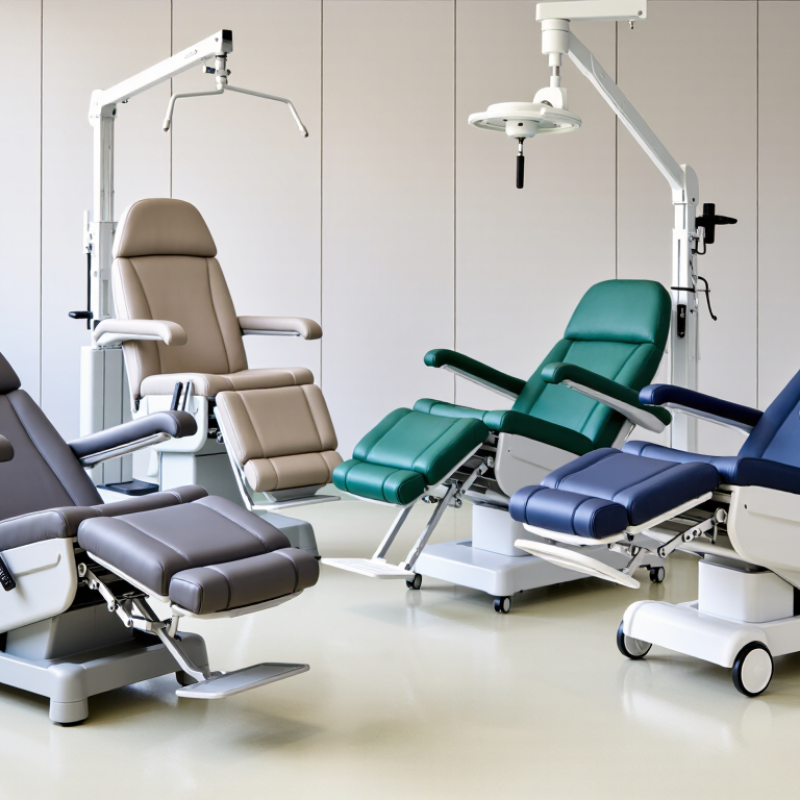
Two-position lift chairs suit users who need help standing and a modest recline for daily rest. They are practical for limited mobility after surgery or during recovery. Fit matters. The seat should support the hips without pressing behind the knees.
Three-position models recline farther for reading, sleeping briefly, or elevating tired legs. They may help users with stiffness, but they are not suitable for every circulation or respiratory condition. A clinician should confirm the safest angle. A common mistake is choosing a deeper recline without checking transfer ability.
Infinite-position chairs allow separate adjustment of the back and footrest. Some models support a near-flat posture, while zero-gravity designs may reduce pressure on selected areas. These options can benefit users who change position often. However, more movement means more controls, and that can confuse people with weak vision or limited hand strength.
Heavy-duty lift chairs provide wider seats and reinforced frames for higher user weights. Check the tested capacity, base stability, cushion firmness, and emergency lowering method. For users at pressure-injury risk, cushioning alone is not enough; regular repositioning remains important.
Global buyers should verify plug type, voltage, maintenance access, spare-part availability, and local electrical certification. It depends. A technically advanced chair may become unreliable when service support is distant. Selection should follow the user’s transfer needs, room space, caregiver ability, and professional assessment rather than appearance alone.
Top Medical Equipment Lift Chairs for Global Buyers
Main Lift Chair Types for Different Medical Needs
The chart compares common lift chair configurations using a functional-fit index from 1 to 5.
Two-position chairs are generally suited to basic standing assistance and short periods of reclining;
three-position chairs provide broader daily-use support; infinite-position chairs are better for users
who need flexible positioning or extended rest; and bariatric lift chairs are designed for higher
weight-capacity requirements and additional transfer stability. Actual specifications vary by model,
so buyers should verify weight capacity, seat width, motor configuration, and clinical requirements.
Purchasing, Shipping, and After-Sales Considerations Worldwide
Top Medical Equipment Lift Chairs for Global Buyers
Purchasing a medical lift chair requires more than comparing prices. Check the user’s weight, height, transfer ability, and daily care routine. A stable frame, smooth lifting motion, washable upholstery, and an easy-to-reach control are practical priorities. Ask suppliers for load-test records, electrical specifications, user instructions, and quality certificates. Local voltage and plug requirements must match the destination. A cheaper chair can become expensive after modifications, delays, or replacement parts.
Tips: Measure twice. Confirm door widths, elevator space, and room turning areas before ordering. Request packed dimensions, gross weight, carton photographs, and spare-part availability. Shipping plans should include moisture protection, shock-resistant packaging, tracking, and clear customs documents. For remote regions, confirm whether delivery reaches the building or only the nearest depot. Insurance terms also need careful reading. “Delivered” does not always mean “installed.”
After-sales support often determines the chair’s real value. Obtain a written warranty covering the motor, handset, frame, and upholstery, with response times stated clearly. Ask how technical faults are diagnosed across time zones. Remote video guidance can help, but some repairs require trained local technicians. Keep serial numbers, purchase records, and maintenance instructions together. In procurement reviews, overlooked cable damage and missing adapters appear surprisingly often. I would not assume every supplier’s service promise is equally practical; test it with specific questions before payment. Safety instructions should remain available in the user’s language, especially for care facilities serving multiple patients.