What Are the Top 10 Medical Scooters for Global Buyers?

Choosing the right medical scooter can change how confidently a person moves through daily life. For global buyers, the decision involves more than price, speed, or appearance. A dependable medical scooter should match the user’s mobility needs, body size, terrain, storage space, and travel plans.

This guide examines ten leading medical scooter options from a practical buyer’s perspective. It considers turning radius, battery range, seat support, controls, ground clearance, charging time, and transport weight. It also reviews foldable, portable, mid-size, and heavy-duty designs for different lifestyles. A scooter that feels stable on a smooth showroom floor may perform differently on uneven sidewalks, steep driveways, or crowded shopping areas. Small details matter.

Safety comes first.

The comparison draws on manufacturer specifications, user-focused design principles, and common mobility equipment evaluation methods. Buyers should verify warranty terms, service availability, battery shipping rules, and local accessibility requirements before ordering internationally. Product availability can change, and published range figures often depend on rider weight, temperature, terrain, and battery condition. That limitation deserves attention.

No single model suits everyone. A lightweight scooter may be convenient but less comfortable for long trips. A powerful model may offer better stability but create storage and transport challenges. This review highlights those trade-offs clearly, helping readers compare real-world value rather than relying on marketing claims alone. A qualified healthcare professional or mobility specialist can also help confirm whether a selected medical scooter fits the user’s physical abilities and daily environment.
What Are the Top 10 Medical Scooters for Global Buyers?

What Are Medical Scooters and Who Uses Them?

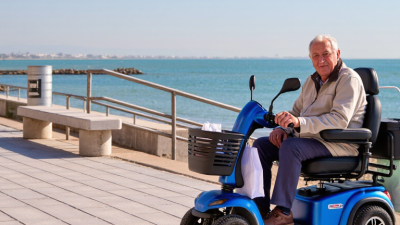
Medical scooters are battery-powered mobility devices designed for people who cannot walk long distances safely or comfortably. They usually have a seat, handlebars, a stable base, and controls for steering and speed. Unlike powered wheelchairs, many scooters require the user to sit upright and steer with both hands.

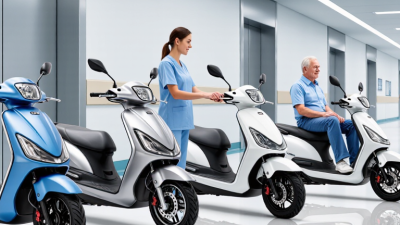
Older adults often use them for shopping, medical appointments, parks, or large public buildings. People with arthritis, balance limitations, chronic fatigue, or recovery-related weakness may also benefit. Some users walk independently indoors but need support outdoors. That difference matters. A scooter should match the user’s strength, posture, vision, and daily environment.

A qualified therapist or mobility specialist can assess turning ability, transfer skills, and braking control. Seat height, armrest position, ground clearance, battery range, and transport weight deserve careful attention. A model that feels stable in a showroom may be difficult on a steep driveway or narrow hallway. Poor fitting can cause shoulder strain, unsafe transfers, or reduced control. I have seen how small details, such as a hard-to-reach key or weak lighting, can change a user’s confidence. Yet personal preference is sometimes overlooked. The fastest scooter is not always the safest choice. Users should practice on ramps, uneven pavement, and crowded walkways before regular travel. Even careful recommendations can miss real-world problems.

What Are the Top 10 Medical Scooters for Global Buyers?

Medical scooters, also called mobility scooters, are battery-powered assistive devices used by people who have difficulty walking long distances or standing for extended periods. The chart compares representative travel-range midpoints for ten commonly considered scooter configurations. Actual performance varies with battery capacity, rider weight, terrain, temperature, and speed.

Values represent typical market ranges reported for comparable mobility-scooter configurations, expressed as approximate kilometres per charge rather than brand-specific specifications.

How to Evaluate Medical Scooters for International Buyers

For global buyers, the “top ten” medical scooters are not simply the fastest or cheapest. Evaluation should begin with real use conditions: indoor turning, uneven pavements, storage, climate, and caregiver support. The World Health Organization and UNICEF estimate that more than 2.5 billion people need assistive products today. This number may exceed 3.5 billion by 2050 (Global Report on Assistive Technology, 2022). UN DESA also projects that one in six people worldwide will be over 65 by 2050 (World Population Prospects, 2022). Practical screening matters. Real roads matter.

Request tested range, maximum user weight, grade performance, braking behavior, and charging time under realistic loads. Buyers should verify whether each scooter is classified as a medical or mobility device locally. Ask for electrical safety evidence, conformity documents, warranty terms, spare-part plans, and battery shipping documentation.

EN 12184 offers a recognized framework for powered wheelchairs and mobility scooters, but compliance alone cannot prove comfort or safety for every rider. Check seat width, transfer height, suspension, anti-tip design, and control reach during a supervised trial.

Build a weighted comparison for ten shortlisted models. Give higher scores to safety, repairability, service access, and verified range than cosmetic features. Check voltage compatibility, charger certification, plug standards, and replacement battery availability. Ask how performance changes in heat, rain, and cold. Marketing data can sound confident. Evidence may be incomplete. My evaluation rule is imperfect but useful: reject any model with unclear testing or weak after-sales support, even when the price looks persuasive.

What Features Define the Top 10 Medical Scooters?

The top 10 medical scooters are defined by practical safety, not appearance alone. A stable four-wheel base helps users travel across uneven paths, while responsive brakes support controlled stopping. Anti-tip wheels add confidence on ramps and slight inclines. However, extra stability can reduce turning space indoors.

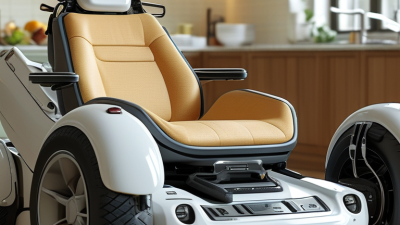
Comfort also matters during daily use. Look for an adjustable seat, supportive backrest, padded armrests, and an easy-to-reach tiller. Controls should remain clear for users with limited hand strength or vision. A tight turning radius helps in kitchens, elevators, and narrow shop aisles. It should not feel like steering heavy furniture.

Battery range must match real routines, including hills, cold weather, and frequent stops. Removable batteries can simplify charging, but they may add handling weight. Durable tires, sealed electronics, and a visible charge indicator improve reliability. Foldable or dismantlable designs help with vehicle transport, although lighter frames may feel less planted outdoors.

Global buyers should review load capacity, warranty terms, spare-part access, and service training before purchase. Clear manuals and documented safety testing show stronger professional preparation. Regional electrical requirements also deserve careful checking. User trials remain valuable because published specifications cannot reveal seat pressure, vibration, or control effort. No scooter is perfect. The right choice balances safety, comfort, maintenance, terrain, and the user’s actual daily habits.

Top 10 Medical Scooters by Performance, Comfort, and Mobility

What Are the Top 10 Medical Scooters for Global Buyers?

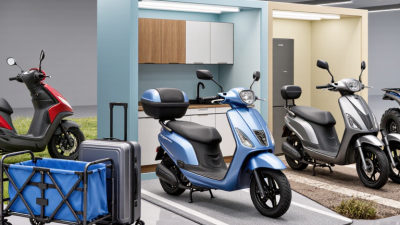
The strongest top ten choices differ by daily mobility needs. A lightweight folding scooter suits airports and compact cars. A three-wheel model turns tightly in shops and narrow hallways. A four-wheel model usually offers better stability outdoors. Long-range scooters support extended community travel. Heavy-duty designs carry larger users and extra equipment. Narrow indoor models protect furniture and doorframes. Suspension-focused models reduce vibration on uneven pavements. Disassembly-friendly scooters simplify lifting and storage. All-terrain versions handle gravel, ramps, and grass more confidently. Modular scooters offer adjustable seats, tillers, and armrests.

Performance is not only about speed. Check braking control, turning radius, ground clearance, battery range, and hill capability. Comfort depends on seat width, back support, legroom, and vibration control. The WHO and UNICEF Global Report on Assistive Technology (2022) estimates that more than 2.5 billion people need assistive products worldwide. That figure may reach 3.5 billion by 2050. Reliable access matters. So does repairability.

Tips: Compare tested range with your real route, not brochure claims. Confirm charger voltage, spare-part access, and local service before purchase. ISO 7176 testing can help assess stability and performance, but test results do not replace a supervised trial. Measure doorways twice. A scooter that feels impressive outdoors may be awkward indoors. I would also question rankings based only on price; comfort and dependable after-sales support are often overlooked.

What Are the Top 10 Medical Scooters for Global Buyers? - Top 10 Medical Scooters by Performance, Comfort, and Mobility

Rank Scooter Category Best Use Maximum Speed Typical Travel Range Maximum User Weight Turning Radius Ground Clearance Transport Weight Comfort Features Mobility & Portability Overall Rating
1 Heavy-Duty Four-Wheel Scooter Outdoor travel, ramps, uneven pavements, and longer daily journeys Up to 15 km/h 35–50 km 180–225 kg 1.4–1.7 m 10–15 cm 85–125 kg High-back reclining seat, adjustable armrests, pneumatic or solid outdoor tyres, rear suspension Very stable outdoors; usually transported with a vehicle lift or ramp 9.3/10
2 Long-Range Four-Wheel Scooter Extended outdoor trips and daily community mobility Up to 12 km/h 30–45 km 135–180 kg 1.3–1.6 m 8–12 cm 70–105 kg Contoured captain’s seat, adjustable tiller, suspension, and full lighting package Excellent stability and battery endurance; limited lifting portability 9.1/10
3 Premium Mid-Size Four-Wheel Scooter Mixed indoor and outdoor use with a balance of comfort and manoeuvrability Up to 10 km/h 25–35 km 120–160 kg 1.1–1.4 m 7–10 cm 55–85 kg Suspension seat, padded armrests, adjustable steering column, and anti-tip wheels Good all-round mobility for pavements, shopping areas, and accessible buildings 8.9/10
4 Three-Wheel Indoor and Pavement Scooter Home use, shopping centres, corridors, and tight turning spaces Up to 10 km/h 20–30 km 115–150 kg 0.8–1.1 m 6–9 cm 45–75 kg Swivel seat, adjustable tiller, padded seat, and compact control layout Superior manoeuvrability; less stable than four-wheel designs on slopes or rough ground 8.7/10
5 Automatic Folding Travel Scooter Air travel, cruises, public transport, and occasional short trips Up to 6–8 km/h 12–20 km 110–135 kg 0.9–1.2 m 5–7 cm 25–32 kg Folding seat, padded backrest, height-adjustable tiller, and electromagnetic braking Highly portable; many designs use removable batteries suitable for transport policies 8.5/10
6 Modular Four-Section Travel Scooter Car boot transport, errands, indoor facilities, and short outdoor routes Up to 6–8 km/h 15–25 km 115–150 kg 0.9–1.2 m 5–8 cm 35–55 kg total Detachable seat and battery, adjustable tiller, padded seat, and flat-free tyres Breaks into several sections; practical for car transport but individual parts may still be heavy 8.3/10
7 Compact Three-Wheel Travel Scooter Indoor mobility, retail spaces, offices, and smooth pavements Up to 6–8 km/h 15–25 km 100–135 kg 0.75–1.0 m 5–7 cm 25–45 kg Adjustable seat, compact tiller, padded armrests, and easy-to-read controls Excellent turning ability and storage efficiency; intended for relatively smooth surfaces 8.1/10
8 Heavy-Duty Three-Wheel Scooter Users requiring higher weight capacity with improved turning performance Up to 10–12 km/h 25–40 km 160–200 kg 1.1–1.4 m 8–12 cm 70–105 kg Wide high-back seat, reinforced frame, adjustable armrests, and suspension More manoeuvrable than comparable four-wheel models; requires careful use on uneven slopes 8.0/10
9 Indoor Compact Scooter Homes, care facilities, hospitals, and narrow indoor passages Up to 6 km/h 10–18 km 100–125 kg 0.7–0.9 m 4–6 cm 20–35 kg Small turning footprint, adjustable seat, simple tiller controls, and solid tyres Very easy to manoeuvre indoors; limited clearance and range for outdoor terrain 7.8/10
10 Basic Lightweight Portable Scooter Short local trips, shopping, and occasional assisted mobility Up to 6 km/h 10–18 km 100–120 kg 0.8–1.0 m 4–6 cm 20–30 kg Simple padded seat, folding or detachable frame, LED indicators, and basic suspension Easy to store and transport; best suited to smooth, level surfaces and shorter journeys 7.6/10

Specifications are representative ranges for commonly available mobility-scooter configurations. Actual speed, range, weight capacity, dimensions, battery performance, and transport suitability vary according to battery size, terrain, user weight, temperature, local regulations, and manufacturer configuration. Buyers should confirm accessibility, charging, warranty, and air-transport requirements before purchase.

How to Choose the Right Medical Scooter for Global Use

Choosing among the top 10 medical scooters for global buyers requires more than comparing prices. The right model must match the user, destination, and daily routine. A compact folding scooter suits hotel rooms and short transfers. A four-wheel model offers steadier handling on uneven pavements. Three-wheel designs usually turn more tightly indoors. Heavy-duty scooters may provide better support, but their size can limit elevators and vehicle access.

Check the seat width, legroom, ground clearance, and maximum safe load. Ask a qualified occupational therapist to assess posture and transfer ability. Range claims need careful reading. Cold weather, hills, rider weight, and frequent stops can reduce real-world distance.

A practical test should include a doorway, curb cut, ramp, and several minutes of continuous driving. Small details matter. Can the tiller adjust easily? Are the controls visible in bright sunlight? Is the brake comfortable for weak hands?

Global use adds further questions. Confirm the charger supports the destination’s voltage and plug system. Battery shipping and airline requirements can differ, so verify them with the carrier before traveling. Reliable local servicing may matter more than an extra kilometer of range. Ask about spare tires, batteries, warranty support, and instruction manuals in your language. Do not assume the most expensive scooter is safest. My own preference would be a lighter model, but that choice can fail on rough roads. Personal comfort, professional assessment, and local support should guide the final decision.